


Journal of Creative Research in English Literature and Culture - Algeria مجلة الأدب الإنجليزي والدراسات الثقافية في الجزائر | Literary Excellence | Postcolonial Studies | Cultural Heritage
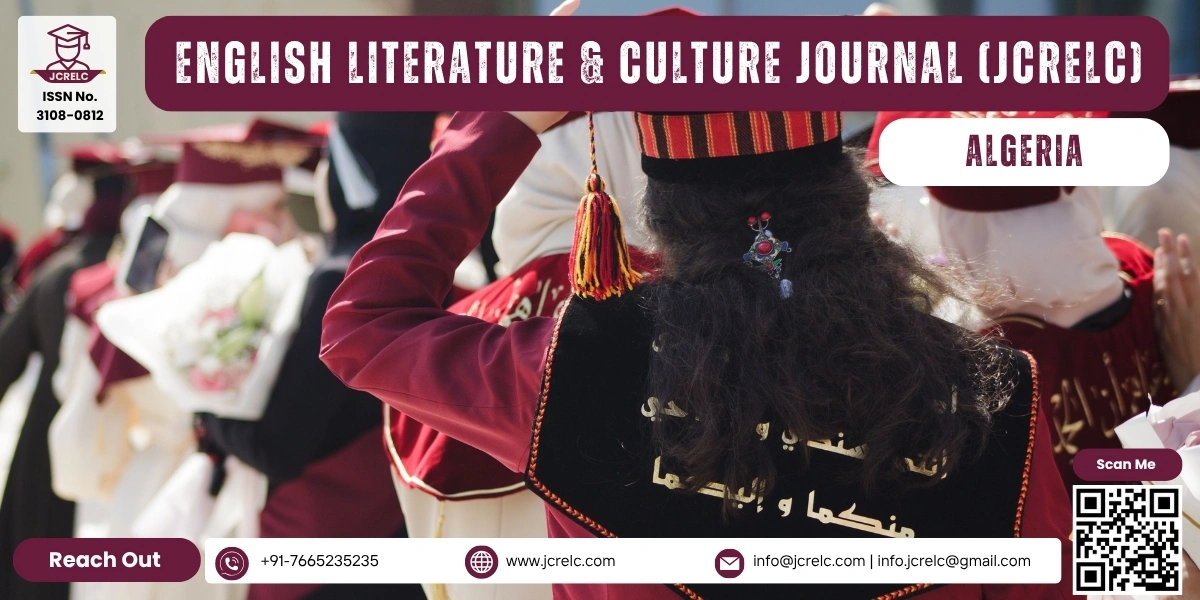
Premier English Literature Journal in Algeria | المجلة الرائدة في الأدب الإنجليزي بالجزائر
ISSN: 3108-0812 | CrossRef Member: 10.25125/english-literature-journal | Indexed in Google Scholar, WorldCat, Academic Databases | أنجزت مجلتنا فهرستها في قواعد البيانات العالمية
Literary Research Landscape in Algeria: Key Statistics
English Literature
Departments
Literary Research
Centers
Academic Journals
& Publications
Literary Scholars
& Researchers
Source: Ministry of Higher Education and Scientific Research of Algeria, National Commission for Academic Accreditation and Evaluation, 2024 Research Report
Literary and Cultural Studies Landscape in Algeria | المشهد الأدبي والدراسات الثقافية في الجزائر
Algeria, with its rich literary heritage spanning Berber, Arabic, French, and English traditions, offers a vibrant landscape for literary and cultural studies. The country's unique position at the crossroads of Africa, the Arab world, and the Mediterranean has fostered a distinctive literary voice shaped by postcolonial identity, cultural hybridity, and resistance narratives. Through institutions like the University of Algiers, the University of Oran, and the National Institute of Humanities, Algeria continues to advance literary scholarship with strong emphasis on postcolonial studies, comparative literature, and cultural identity.
Postcolonial Studies | الدراسات ما بعد الاستعمارية
Algerian literature offers rich material for postcolonial analysis, exploring themes of identity, resistance, memory, and cultural negotiation in the context of French colonial rule and the War of Independence.
Maghreb Literature & Cultural Studies | الأدب المغاربي والدراسات الثقافية
Algerian literature is a cornerstone of Maghreb studies, encompassing works in Arabic, French, and Tamazight that reflect the region's linguistic diversity and cultural complexity.
About JCRELC: Your Partner in Literary Research | JCRELC: شريكك في البحث الأدبي
The Journal of Creative Research in English Literature and Culture (JCRELC) is a prestigious, peer-reviewed, open-access journal dedicated to advancing literary and cultural studies globally. We provide Algerian researchers, literary scholars, and cultural studies professionals with a respected platform to publish their groundbreaking findings and contribute to the global literary community.
With our commitment to quality, speed, and visibility, JCRELC ensures that research from Algeria reaches a worldwide audience, fostering collaboration and knowledge exchange that addresses both local and global literary challenges. Our journal aims to be accessible through major academic databases and Algerian literary research networks.
Open Access
الوصول المفتوحRapid Review
4-6 weeks | 4-6 أسابيعGlobal Indexing
Google Scholar, WorldCat, CrossRefTop Algerian Institutions Publishing in JCRELC | أبرز المؤسسات الجزائرية الناشرة في JCRELC
Researchers from these leading Algerian institutions have published their work in JCRELC:
- University of Algiers 1 - Department of English
- University of Oran 1 - Faculty of Letters and Languages
- University of Constantine 1 - Department of English
- University of Annaba - Department of English
- University of Tizi-Ouzou - Department of English
- University of Batna - Faculty of Letters and Languages
- National Institute of Humanities, Algiers
- Research Center for Arabic Literature
- Algerian Academy of Literature
Algeria's Literary Research Priorities | أولويات البحث الأدبي في الجزائر
The Ministry of Higher Education and the National Institute of Humanities have identified key priority areas:
Postcolonial Algerian Literature | الأدب الجزائري ما بعد الاستعمار
- Algerian War of Independence narratives (1954-1962)
- Postcolonial identity and cultural hybridity
- Memory, trauma, and reconciliation in Algerian literature
- Francophone and Anglophone Algerian writing
- Women's voices in Algerian literature
Maghreb Literature & Francophone Studies | الأدب المغاربي والدراسات الفرانكفونية
- Comparative Maghreb literary studies
- Francophone literature and cultural identity
- Translation studies (Arabic-French-English)
- Mediterranean literary connections
- Diaspora and exile in Maghreb literature
Resistance & Revolutionary Literature | أدب المقاومة والثورة
- Literature of the Algerian Revolution (1954-1962)
- Anti-colonial discourse and resistance narratives
- Prison literature and testimonial writing
- Nationalism and cultural identity in literature
- Revolutionary poetry and prose
Gender & Women's Studies | دراسات النوع الاجتماعي والمرأة
- Women's writing in Algerian literature
- Feminist literary criticism and theory
- Gender representation in Algerian fiction
- Women's voices in postcolonial literature
- Intersectionality and identity in literature
Comparative & World Literature | الأدب المقارن والعالمي
- Comparative studies (Algerian vs. World literature)
- World literature and translation studies
- Cross-cultural literary analysis
- Global literary movements and Algeria
- Interdisciplinary literary approaches
Multilingual & Translation Studies | الدراسات متعددة اللغات والترجمة
- Translation theory and practice (Arabic-French-English)
- Berber (Tamazight) literature and translation
- Multilingualism in Algerian literature
- Cultural translation and literary reception
- Translation of Algerian literature globally
Algerian Literary Heritage & Notable Authors | التراث الأدبي الجزائري وأبرز الكتاب
Algeria has a rich literary heritage spanning over 2,000 years, influenced by Roman, Arab, Ottoman, French, and indigenous Berber cultures. The country's unique literary traditions are celebrated worldwide, including the works of Albert Camus, Kateb Yacine, Mohammed Dib, Assia Djebar, and Mouloud Mammeri. The National Institute of Humanities and various university departments maintain extensive collections preserving Algerian literary heritage and manuscripts.
Literary Heritage
Albert Camus (1913-1960)
Algerian-born French author, Nobel Prize in Literature (1957), famous for "The Stranger" and "The Plague"
Kateb Yacine (1929-1989)
Algerian revolutionary author, famous for "Nedjma", symbol of Algerian resistance literature
Assia Djebar (1936-2015)
Algerian novelist, translator, and filmmaker, famous for "Fantasia: An Algerian Cavalcade"
Mohammed Dib (1920-2003)
Algerian novelist, poet, and playwright, famous for his "Algerian Trilogy"
Mouloud Mammeri (1917-1989)
Algerian Berber novelist, linguist, and anthropologist, famous for "The Forgotten Hill"
Mouloud Feraoun (1913-1962)
Algerian novelist, famous for "The Poor Man's Son", assassinated during the War of Independence
Leading Literary Research Institutions in Algeria | أبرز مؤسسات البحوث الأدبية في الجزائر
- University of Algiers 1 - Department of English
- University of Oran 1 - Faculty of Letters and Languages
- University of Constantine 1 - Department of English
- National Institute of Humanities, Algiers
- Research Center for Arabic Literature
- Algerian Academy of Literature
- University of Annaba - Department of English
- University of Tizi-Ouzou - Department of English
- University of Batna - Faculty of Letters
- National Library of Algeria - Literary Archives
Why Algerian Researchers Choose JCRELC | لماذا يختار الباحثون الجزائريون JCRELC
Rigorous Peer Review
Double-blind peer review ensures quality, reliability, and credibility of published research, enhancing your academic reputation.
High Visibility & Impact
Indexed in Google Scholar, CrossRef, WorldCat, and other academic databases, ensuring global visibility for your research.
Rapid Publication
Efficient editorial workflow with average publication time of 4-6 weeks from submission to online publication.
CrossRef DOI Registration
Every published article receives a unique DOI, ensuring permanent accessibility and citation tracking.
Frequently Asked Questions | أسئلة متكررة
Comprehensive FAQ for Algerian Authors | أسئلة متكررة للباحثين الجزائريين
Find answers about submission process, peer review, publication fees, indexing status, and more for Algerian literary researchers.
The average time from submission to publication is 4-6 weeks for articles from Algerian researchers. Our streamlined peer review process ensures rapid publication without compromising quality.
Yes, JCRELC is indexed in Google Scholar, CrossRef, WorldCat, and other academic databases. We are actively pursuing indexing in African Journals Online (AJOL) and Algerian Academic Databases to increase visibility for Algerian researchers.
Current Indexing Status | حالة الفهرسة الحالية:
- Google Scholar | جوجل سكولار
- CrossRef (DOI Member) | كروس ريف
- WorldCat | وورلد كات
- Academic Databases | قواعد البيانات الأكاديمية
- AJOL (in progress) | قيد التقدم
Absolutely! JCRELC actively welcomes research on Algerian literature, postcolonial studies, Maghreb literature, Francophone studies, cultural identity, and all areas of Algerian literary excellence. Research on comparative literature, translation studies, and interdisciplinary approaches is particularly encouraged.
- Postcolonial Algerian literature and identity studies
- Maghreb literature and cultural hybridity
- Resistance and revolutionary literature (Algerian War of Independence)
- Francophone and Anglophone Algerian writing
- Comparative literature and world literature studies
- Gender studies and women's writing in Algeria
- Translation studies and multilingual literature
Publication fees vary based on article type and length. We offer special discounted rates for researchers from Algerian institutions. Ministry of Higher Education grants can be utilized for publication fees.
Academic Faculty | أعضاء هيئة التدريس
$100 (USD)
Approx. 14,000 DZD
Students/Scholars | الطلاب / الباحثون
$80 (USD)
Approx. 11,200 DZD
You can submit your article online via the Submit Article Link on the journal's homepage. You can also email your submission to info@jcrelc.com or info.jcrelc@gmail.com. Electronic submission helps reduce processing time and speeds up publication.
The official language of publication is English to ensure global accessibility. We offer assistance with English language editing and can help polish manuscripts before publication to ensure they meet international standards.
You can contact our editorial office through multiple channels:
WhatsApp:
+91-7665235235
Response within 24 hours on business days | الرد في غضون 24 ساعة في أيام العمل
Join Algeria's Leading Literary Researchers | انضم إلى كبار الباحثين الأدبيين في الجزائر
Share your research with the global literary community. JCRELC is your trusted partner in advancing literary and cultural studies from Algeria to the world. | شارك أبحاثك مع المجتمع الأدبي العالمي. JCRELC هو شريكك الموثوق في تطوير الدراسات الأدبية والثقافية من الجزائر إلى العالم.
Submit Your Research | أرسل بحثك
Online Submission | التقديم عبر الإنترنت
https://jcrelc.com/submit-article
Fast, secure, and user-friendly submission portal | بوابة تقديم سريعة وآمنة وسهلة الاستخدام
Email Submission | التقديم عبر البريد الإلكتروني
info@jcrelc.com
info.jcrelc@gmail.com
For inquiries or direct submission | للاستفسارات أو التقديم المباشر