


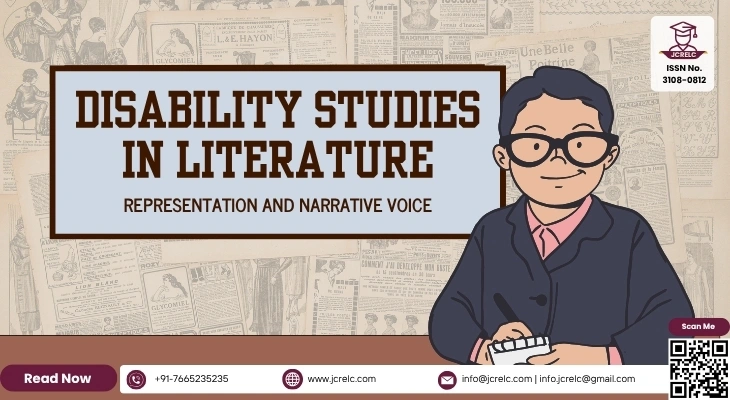
Disability Studies in literature examines how texts represent disability, identity, embodiment, and lived experience. It challenges traditional narratives that often portray disability as tragedy, limitation, or symbolic device, instead emphasizing disabled voices, agency, and diverse ways of being in the world.
In 2026, disability representation in literature is undergoing significant transformation. Writers, scholars, and readers are increasingly focused on authenticity, narrative voice, and the ethics of representation, reshaping how disability is understood in global literary culture. For researchers exploring these themes, learning how to write a research paper for a Scopus journal is essential for publishing impactful work in this emerging field.
Understanding Disability Studies in Literature
Disability Studies is an interdisciplinary field that explores:
- How disability is represented in cultural texts
- How social systems define "normal" and "abnormal" bodies
- How identity is shaped by physical, cognitive, and sensory differences
- How literature can challenge ableist assumptions
In literary studies, it encourages a shift from viewing disability as metaphor to recognizing it as lived experience.
From Representation to Authentic Voice
One of the most important shifts in contemporary literature is the move from representing disability externally to centering disabled narrative voices. This connects with broader discussions in Trauma Studies in Contemporary Fiction, where authentic voice and lived experience are central to healing narratives.
This includes:
- First-person disabled narrators
- Autobiographical and memoir-based storytelling
- Fiction written by disabled authors
- Stories that avoid pity-based framing
Authentic voice ensures that disability is not spoken about "for" disabled individuals but expressed "by" them.

Challenging Ableism in Literature
Ableism refers to social attitudes and structures that privilege able-bodied norms. Literature has historically reflected these biases.
Disability Studies challenges:
- Stereotypes of disability as suffering or inspiration
- The "heroic overcoming" narrative
- Erasure of disabled sexuality and complexity
- Assumptions of dependence and incapacity
Modern literary criticism aims to dismantle these limiting frameworks. This aligns with discussions in Cultural Studies vs Cultural Research, where power structures and representation are central concerns.
Disability as Identity, Not Metaphor
Traditional literature often uses disability symbolically—for example, blindness as ignorance or physical impairment as moral failure.
Disability Studies rejects this approach and emphasizes:
- Disability as a legitimate identity category
- Complex lived experiences beyond symbolism
- Intersectionality with race, gender, and class
- Diversity within disability communities
This shift changes how readers interpret character and meaning.
Narrative Voice and Embodiment
Narrative voice plays a crucial role in how disability is experienced in literature. It shapes how readers understand perception, movement, and cognition.
Key aspects include:
- Sensory-based storytelling (sound, touch, spatial awareness)
- Non-linear or fragmented narrative structures
- Alternative perspectives on time and memory
- Internal vs external perception of disability
These techniques expand what storytelling can look like. This connects with discussions in Cognitive Literary Studies, where narrative engagement and reader perception are central concerns.
Intersectionality in Disability Narratives
Disability does not exist in isolation. Contemporary literature explores its intersection with:
- Gender and sexuality
- Race and ethnicity
- Socioeconomic status
- Migration and displacement
- Mental health and neurodiversity
Intersectional narratives reflect the complexity of real-world identity. This aligns with discussions in Feminist Literary Criticism 2026 and Queer Theory and Literature.
Neurodiversity and Cognitive Difference
A major development in Disability Studies is the inclusion of neurodivergent experiences.
Literature increasingly features:
- Autistic perspectives
- ADHD and learning difference narratives
- Mental health conditions portrayed with nuance
- Cognitive variation as normal human diversity
This expands the definition of narrative intelligence and perception.
Disability in Genre Fiction
Disability representation is also growing in genre literature, including:
- Fantasy worlds with disabled heroes and magical systems of access
- Science fiction exploring prosthetics, AI augmentation, and cyborg identity
- Dystopian narratives addressing bodily control and surveillance
- Contemporary realism focused on everyday accessibility challenges
These genres allow imaginative rethinking of ability and embodiment.
Accessibility in Literary Form
Disability Studies also examines how form and structure affect accessibility.
This includes:
- Audiobooks and multimodal storytelling
- Large print and accessible digital formats
- Visual descriptions in narrative design
- Simplified language versions for broader access
Accessibility becomes part of literary innovation, not just accommodation.
Ethics of Representation
A central concern in Disability Studies is ethical representation.
Key questions include:
- Who has the right to tell disability stories?
- How can stereotypes be avoided?
- Does representation empower or exploit?
- How is lived experience respected in fiction?
Ethical storytelling requires sensitivity, accuracy, and inclusion.
Disability Narratives in Global Literature
In 2026, disability literature is increasingly global. This connects with discussions in Comparative Literature Today, where cross-cultural literary exchange is a central theme.
Trends include:
- Indigenous perspectives on disability and healing
- Non-Western medical and cultural frameworks
- Translated disability narratives gaining visibility
- Regional storytelling traditions shaping representation
This global lens challenges Western-centered models of disability.
The Role of Digital Media
Digital platforms are transforming disability storytelling through:
- Online memoirs and blogs
- Social media storytelling communities
- Podcast narratives of lived experience
- AI-assisted accessibility tools for readers and writers
These platforms amplify disabled voices globally. For additional guidance on academic writing and research, explore AD Publications' guide on writing a complete research paper.
Challenges in Disability Representation
Despite progress, challenges remain:
- Tokenism in mainstream publishing
- Lack of disabled editors and decision-makers
- Misrepresentation in popular media adaptations
- Limited accessibility in publishing infrastructure
Ongoing advocacy is needed for structural change.
Future of Disability Studies in Literature
The future of Disability Studies is expanding toward:
- AI-generated accessible storytelling tools
- Interactive narratives designed for diverse sensory experiences
- Greater inclusion of disabled authors in publishing leadership
- Cross-disciplinary research with medicine, technology, and ethics
- Expanded global disability literary archives
These developments will deepen inclusivity in literary culture.
Continue Exploring Our Blog
We invite you to read more insightful articles from our blog to support your academic journey in English Literature, Cultural Studies, and Research Methodology:
-
Speculative Fiction and Social Justice: Afrofuturism and Beyond
Explore how speculative narratives address racial justice, climate futures, and resistance literature through Afrofuturism and global futurisms. -
Digital Social Reading: How Online Communities Are Changing Literary Experience
Discover how online book communities, annotation tools, and social media are transforming reading from solitary to shared experience. -
Posthumanism in Literature: AI, Cyborgs, and the Future of Character
Understand how artificial intelligence, cyborgs, and posthuman narratives are reshaping literary characters and storytelling. -
African Literature in English: Postcolonial Voices Shaping World Letters
Explore how African writers reshape world literature through oral traditions, language politics, and postcolonial identity narratives.